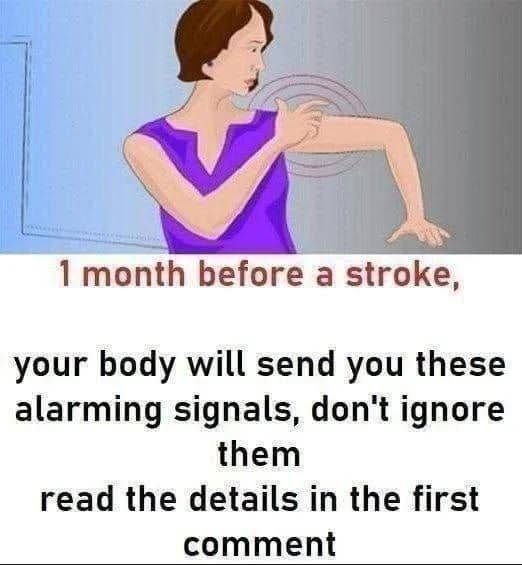
Headlines warning about “Stroke signs that appear one month before” are among the most dangerous examples of health clickbait. They exploit a terrifying medical event by dangling the promise of a long, predictable warning window, suggesting that your body sends out obvious distress signals weeks in advance.
In reality, a sudden stroke is an acute cardiovascular or neurological emergency. While some people experience minor warning episodes days or weeks prior, framing them as a reliable “one-month countdown” is medically misleading and dangerously minimizes how strokes actually happen.
The Reality of “Early Warning” Signs (Transient Ischemic Attacks)
When articles claim to spot stroke signs weeks in advance, they are usually talking about a Transient Ischemic Attack (TIA), often called a “mini-stroke.”
-
What a TIA Is: A TIA happens when a blood clot temporarily blocks an artery in the brain, causing stroke-like symptoms (such as sudden weakness, speech difficulty, or vision changes) that resolve quickly, usually within a few minutes to an hour, leaving no permanent damage.
-
Why It’s Dangerous to Ignore Them: A TIA does not mean the danger has passed; it is a major red flag and warning sign that a full, severe stroke could happen soon—sometimes within days or weeks.
-
The Misleading Timeline: Clickbait treats a TIA or subtle precursor symptoms as a neat, leisurely one-month notice. In medicine, a TIA is treated as an immediate emergency requiring a doctor or ER visit right then, not something to monitor over the course of a month.
What Actual Stroke Symptoms Look Like (The FAST Test)
Strokes are sudden. When brain cells are abruptly deprived of oxygen, symptoms strike rapidly without weeks of slow buildup. Emergency medical professionals rely on the FAST acronym to spot an active stroke:
-
F – Face Drooping: Does one side of the face droop, or is it numb? Ask the person to smile.
-
A – Arm Weakness: Is one arm weak or numb? Ask the person to raise both arms. Does one drift downward?
-
S – Speech Difficulty: Is their speech slurred, are they unable to speak, or are they hard to understand? Ask them to repeat a simple sentence.
-
T – Time to Call Emergency Services: If they show any of these symptoms—even if the symptoms go away—call emergency services immediately. Every minute counts.
Other sudden signs can include a severe, blinding headache with no known cause, sudden trouble seeing in one or both eyes, or sudden loss of balance, coordination, or dizziness.
How to Protect Your Vascular Health
Because strokes are usually tied to long-term cardiovascular health rather than a sudden monthly countdown, prevention is all about managing the core risk factors:
-
Blood Pressure: High blood pressure is the single biggest controllable risk factor for a stroke.
-
Heart Health: Managing conditions like atrial fibrillation (an irregular heartbeat) with a doctor’s guidance.
-
Lifestyle Factors: Keeping active, eating a balanced diet, avoiding smoking, and moderating alcohol intake.
Did one of these alarming stroke-prediction articles pop up in your feed today?
