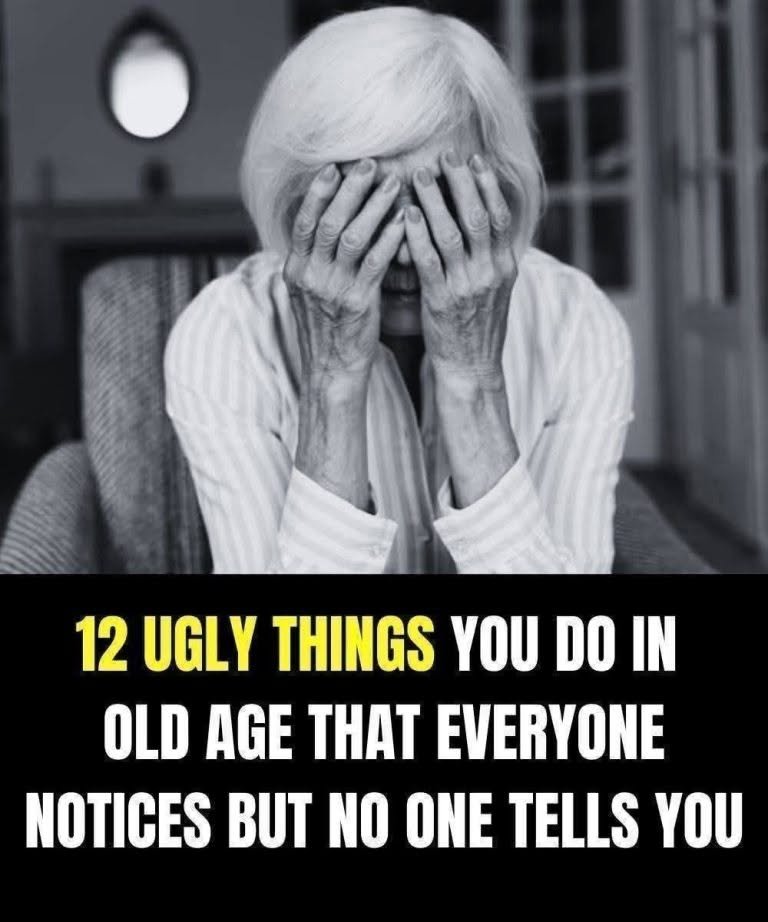
Headlines proclaiming “12 nasty things you do in old age that everyone notices, but no one dares to tell you” are peak internet engagement bait. They weaponize universal human anxieties about aging, social perception, and the fear of losing self-awareness, wrapping them in a harsh, shame-driven package designed solely to make you click out of sheer paranoia.
While physical and sensory changes do happen as we grow older, framing them as “nasty” social taboos misses both the biological reality and the empathy required to understand aging.
Why These Headlines Are So Manipulative
-
The Fear of Judgement: These titles prey on the sensitive human fear of becoming a burden, being socially isolated, or unknowingly committing a faux pas that others mock behind our backs.
-
Generalizing Normal Age-Related Changes: Articles like this typically take natural physiological shifts—like declining sensory perception or changing metabolism—and rebrand them as offensive personal failings.
-
The Clickbait Formula: By claiming “everyone notices, but no one dares to tell you,” the headline manufactures a fake consensus and isolates the reader, making them feel like they need the article’s “secret list” to fit in.
The Reality Behind the Common Tropes
When you peel back the sensationalized wording, these lists usually target a few predictable, age-related phenomena:
-
Olfactory Decline (Changes in Sense of Smell): One of the most common targets is body odor or hygiene. As people age, the olfactory bulbs in the nose naturally lose sensitivity. Older adults might not realize that a certain distinct body odor (often linked to a compound called 2-nonenal, which increases with age and doesn’t wash off easily with regular soap) or a favorite perfume has grown much stronger. It’s a sensory shift, not a lack of cleanliness.
-
Auditory Adjustments (Speaking Loudly): Age-related hearing loss (presbycusis) creeps up gradually. Because older individuals can’t hear themselves clearly, they often speak much louder than intended, which listicles love to mischaracterize as obnoxious or abrasive.
-
Taste Bud Atrophy: As taste buds decrease in number and sensitivity over time, older adults may heavily over-season their food with salt, sugar, or spices to taste anything at all. Sensationalized lists often frame this as bizarre dietary habits.
-
Physical Habits and Comfort: Reduced joint flexibility, arthritis, or stiffness can change how someone moves, sits, or clears their throat. Minor habits born out of physical discomfort are often mocked in these articles as lacking social etiquette.
Treating Aging with Context, Not Shame
Aging is a universal human trajectory that changes our bodies, our senses, and our daily experiences. Approaching these changes with practical awareness—like updating bathroom products, being mindful of speaking volume, or having open, gentle conversations with loved ones—is infinitely more constructive than reading a toxic list designed to humiliate older generations for clicks.
Did this particular headline pop up in your feed, or were you reflecting on how society portrays aging?
