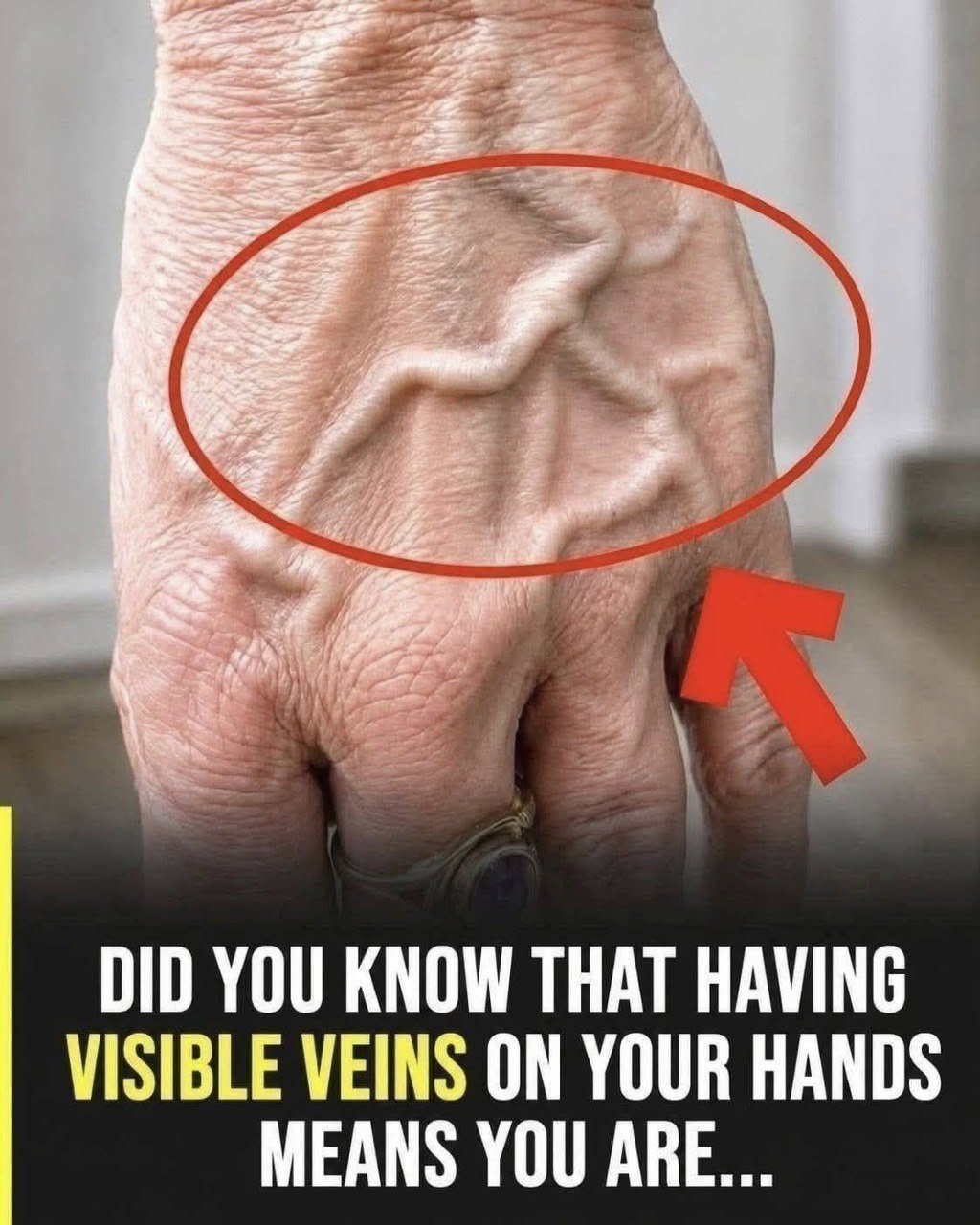
…another classic health clickbait hook!
Articles or videos that start with “Did you know that having visible veins means you are…” almost always follow up with a dramatic, oversimplified generalization designed to make you instantly second-guess your anatomy.
In reality, having visible veins is rarely a secret sign of a hidden catastrophe or a magical superpower—it is usually just a reflection of normal human biology, genetics, and lifestyle.
What Visible Veins Actually Mean
Depending on where they show up and what your body is doing, prominent or visible veins typically point to a few very mundane, everyday factors:
-
Low Body Fat or High Muscle Mass: If your veins are prominent on your arms, hands, or legs, it often simply means you have a lower percentage of subcutaneous fat (the fat layer just beneath the skin) or well-developed muscles from exercise. When muscles contract or push outward, they bring veins closer to the surface.
-
Fair or Thin Skin: Skin tone and thickness play a huge role. People with lighter complexions naturally have veins that show through with a bluish or greenish tint. Furthermore, as people age, skin naturally loses collagen and elasticity, thinning out and making underlying veins easier to see.
-
Genetics and Body Type: Some people are just naturally “veinier” because of their inherited physical structure. If your parents or family members have prominent veins, you likely will too.
-
Heat and Hydration: When it is hot outside, your blood vessels dilate (widen) to help release body heat and cool you down, which makes surface veins pop out more noticeably.
-
Temporary Pressure: Strenuous weightlifting, intense exercise, or tight clothing can temporarily increase blood pressure in your vessels, making them stand out during or right after the activity.
When Visible Veins Do Matter
While most visible veins are completely harmless and purely cosmetic, vascular specialists do look at specific changes when evaluating health, particularly in the lower extremities:
-
Varicose Veins / Venous Insufficiency: If veins in the legs become twisted, bulging, dark, or rope-like—and are accompanied by aching, throbbing, or swelling in the ankles—it can indicate that the tiny one-way valves inside the veins aren’t pumping blood back up to the heart as efficiently as they should.
-
Sudden Changes: A vein that suddenly becomes hard, painful, very warm to the touch, or swollen should be evaluated by a doctor to rule out superficial blood clots (superficial thrombophlebitis).
The Bottom Line
If your veins have always been visible, or if they pop out when you’re active or warm, it’s generally just your circulatory system doing its normal job.
Did a specific headline catch your attention with a wild claim about what visible veins supposedly predict?
