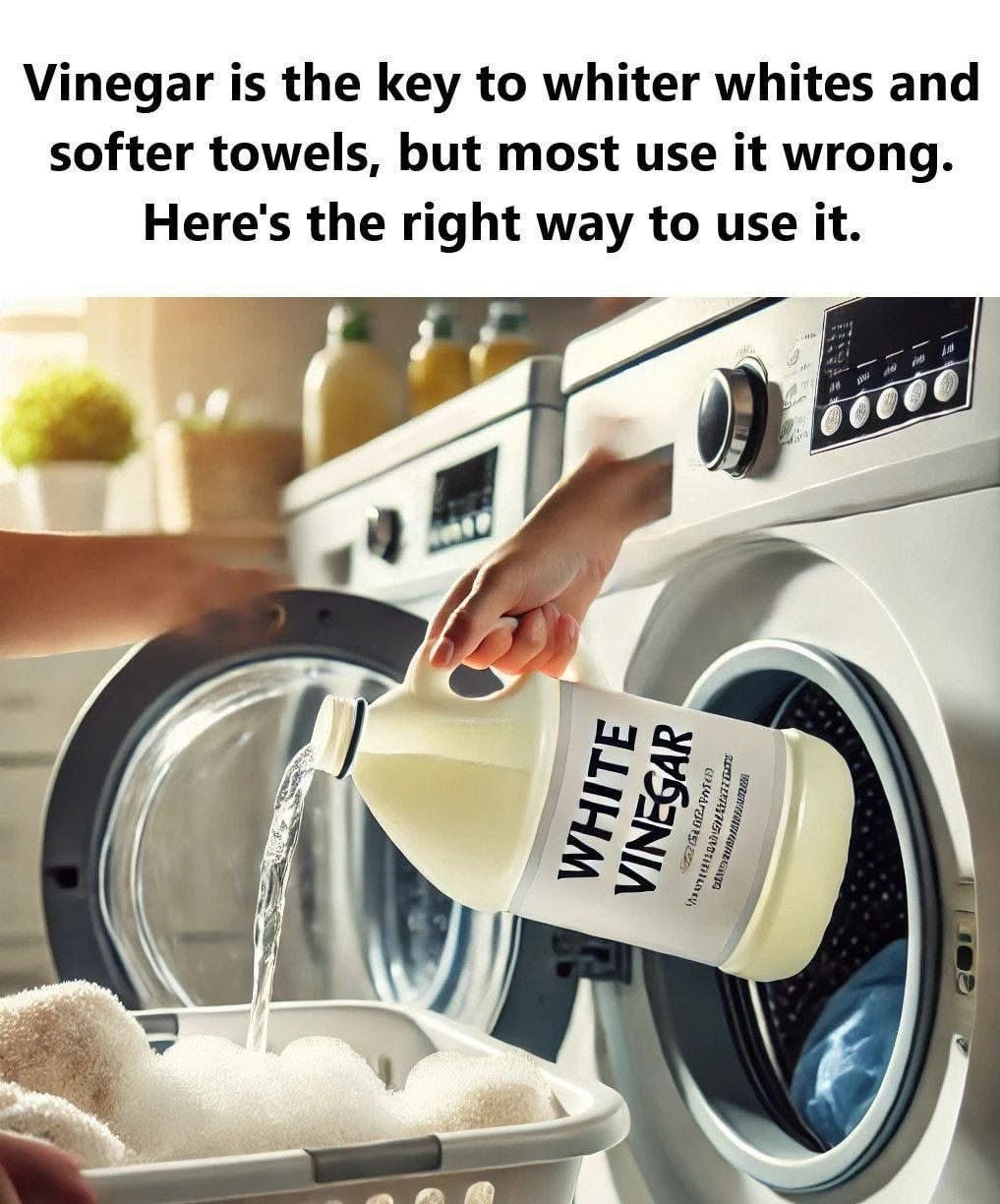
Headlines claiming that “Vinegar is the key to whiter whites and softer towels (but most people use it wrong)” are a masterclass in laundry-hack clickbait. They take a genuinely useful household staple—distilled white vinegar—and wrap it in a layer of mystery and urgency, as if generations of people have been doing their laundry completely backward.
While vinegar is a fantastic natural laundry aid, it isn’t a magical potion, and misusing it can actually damage your washing machine.
The Truth About Vinegar in the Laundry
Distilled white vinegar contains about 5% acetic acid, which makes it great for specific laundry tasks, but it doesn’t work the way these dramatic headlines suggest.
-
Softening Towels (The Reality): Commercial fabric softeners leave a waxy, chemical buildup on fabric fibers over time, which actually reduces a towel’s ability to absorb water. Vinegar acts as a mild stripping agent that cuts through detergent residue and soap scum, leaving towels genuinely fluffy and absorbent.
-
Whiter Whites (The Reality): Vinegar is an acid, which means it can help break down mineral deposits and detergent buildup that make white clothes look dingy or yellowed. However, it is not a bleach. It won’t magically transform a stained gray shirt into blinding white without a little help from the sun or actual laundry boosters.
How “Most People Use It Wrong” (The Real Risks)
The grain of truth behind the “you’re using it wrong” warning is that vinegar can be hard on certain parts of your washing machine if you aren’t careful.
-
Pouring It Directly on Clothes: Dumping straight, un-diluted vinegar onto fabric—especially delicate or colored items—can cause localized bleaching or weaken fibers due to its acidity.
-
The Rubber Seal Hazard: This is the big one. Pouring vinegar directly into your machine’s rubber gaskets or using it in excessive amounts on every single load can slowly degrade the rubber hoses and rubber door seals in modern washing machines, leading to costly leaks.
-
Mixing It with Bleach: Never mix vinegar with chlorine bleach. Combining an acid and bleach creates a toxic chlorine gas, which is a genuine household hazard.
The Right Way to Use Vinegar in Your Laundry
If you want to use vinegar safely and effectively for soft towels or cleaner loads, here is the proper method:
-
Use It in the Rinse Cycle: Instead of adding it at the beginning of the wash with your detergent (which neutralizes the detergent’s cleaning power), pour about 1/2 cup to 1 cup of distilled white vinegar into the fabric softener dispenser during the rinse cycle. The machine will dilute it with water, and the rinse action will wash away the detergent residue and the vinegar smell.
-
Stick to Plain White Vinegar: Skip the apple cider vinegar or fancy balsamic for cooking—only cheap, clear, distilled white vinegar belongs in your laundry room.
-
Don’t Overdo It: You don’t need it in every load. Save it for towels, athletic gear that holds onto odors, or occasional loads of whites.
Are you looking for natural ways to freshen up laundry, or did this headline pop up while you were looking for household cleaning hacks?
