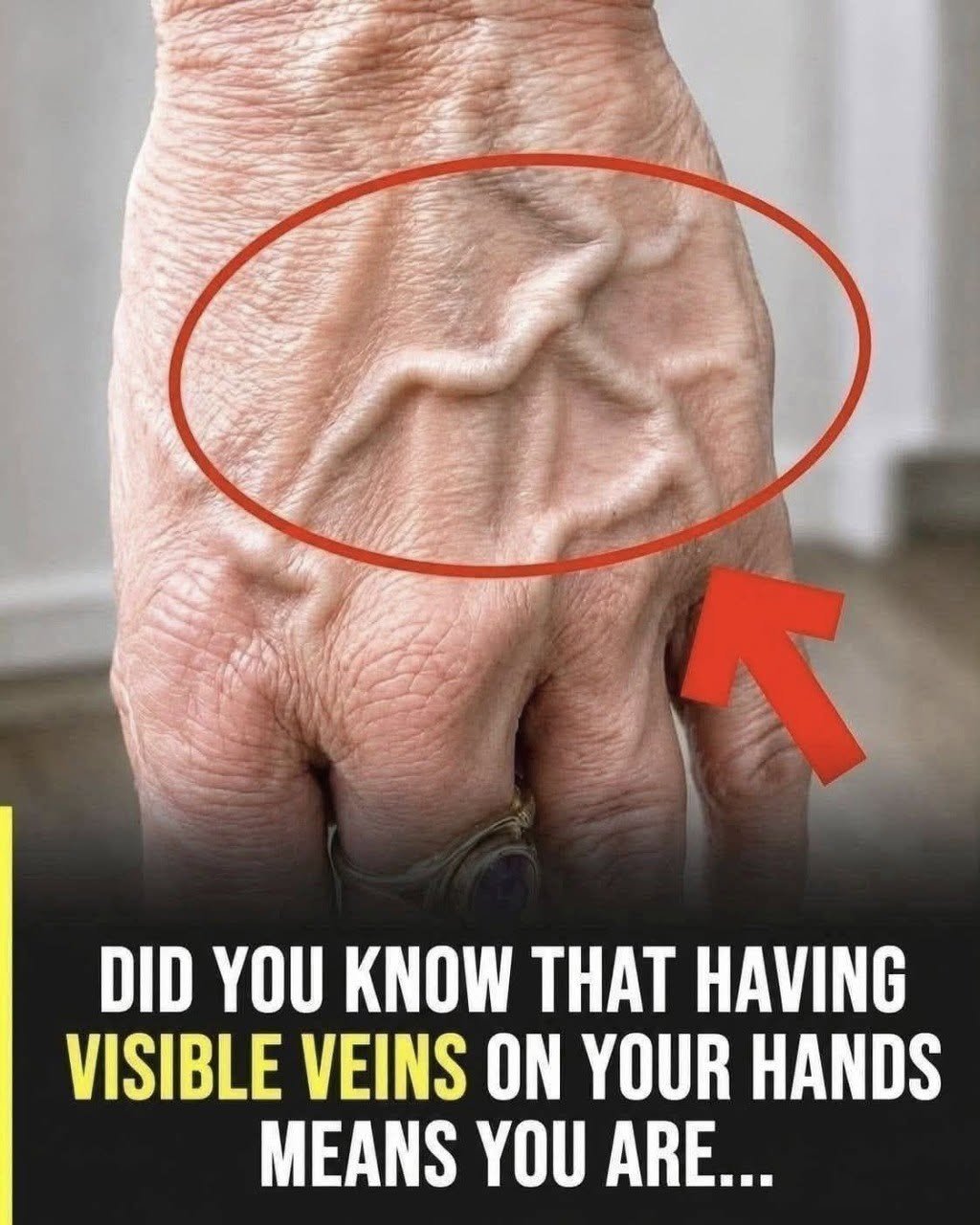
…another classic bait-and-switch hook designed to hijack your natural curiosity and turn a completely mundane physiological trait into a source of unnecessary medical anxiety. Internet health content loves to take normal human variation and frame it as a secret message from your body.
When you dig past the sensationalized headlines, the reality of vascular anatomy is far less dramatic and a lot more fascinating.
The Anatomy of Surface Veins: Why Some People Are “Veinier” Than Others
Your circulatory system is a massive, highly adaptable plumbing network featuring roughly 60,000 miles of blood vessels. Veins are responsible for returning deoxygenated blood back up to your heart against gravity. Because many of these return paths sit just beneath the skin—known as superficial veins—their visibility is influenced by a complex interplay of genetics, physics, and daily lifestyle factors:
-
Subcutaneous Fat Distribution: The layer of fat resting directly beneath your skin acts as natural padding. Individuals with a naturally lower percentage of body fat, or those who maintain a lean physique through consistent physical training, have less tissue masking those underlying structures, making superficial veins far more prominent on the arms, hands, and legs.
-
Dermatological Characteristics: Skin thickness and melanin levels vary wildly from person to person. Fair skin allows the bluish-green hue of deoxygenated hemoglobin to show through much more easily. Furthermore, as we age, natural collagen degradation and loss of skin elasticity cause the dermis to thin, rendering once-hidden veins visible.
-
Vasodilation and Thermal Regulation: Your vascular system acts as your body’s personal radiator. When ambient temperatures rise or you exercise vigorously, blood vessels dilate (widen) to push warm blood closer to the surface of the skin to release heat and cool you down. This temporary expansion causes veins to swell and “pop” outward.
-
Transient Hydrostatic Pressure: Heavy lifting, intense resistance training, or even wearing tight garments temporarily increases internal venous pressure. This forces blood into superficial pathways, giving athletes that characteristic vascular look during a workout.
When Visible Veins Actually Warrant Medical Attention
While cosmetic visibility is almost always harmless, vascular specialists and physicians look for very specific, pathological changes when evaluating vein health in the lower extremities:
-
Chronic Venous Insufficiency (CVI) and Varicose Veins: Healthy veins rely on tiny, one-way microscopic valves that snap shut to prevent blood from flowing backward down your legs. When these valves weaken or fail, blood pools inside the vessel, causing it to stretch, twist, and bulge into thick, ropy varicose veins. If left unmanaged, this can lead to chronic aching, heavy legs, ankle swelling, and skin discoloration.
-
Superficial Thrombophlebitis: If a visible surface vein suddenly becomes hard, tender, intensely red, or warm to the touch, it can indicate a localized blood clot in a superficial vein. While typically less dangerous than a deep vein thrombosis (DVT), it still requires professional medical evaluation.
Ultimately, prominent veins are usually just a sign of an active lifestyle, warm weather, thin skin, or good old-fashioned genetics.
Have you noticed your veins becoming more prominent recently, or did a specific clickbait article try to convince you it meant something ominous?
